Proton Unlimited Review 2026:
Is It Worth Paying For?
Date Published: 17 July 2026 / Author: Baizaar Lee / Last Updated: 17 July 2026
TL;DR:
This Proton Unlimited Review 2026 reaches a simple verdict: worth paying for if you use at least three of the tools inside, a bad deal if you only need one. Six services sit under one account, Mail, VPN, Drive, Pass, Calendar and Wallet, all paid tiers, with 500 GB thrown in. Buy it to escape ad-funded scanning and account linkage from Google or Microsoft, and put several private tools on one bill instead of five.
Skip it if a single service, or a good specialist, would do the same job for less. You get privacy you can verify and one subscription rather than five. In return you accept collaboration a notch below Google or Microsoft, and the chance of paying for apps that gather dust.
BAIZAAR editorial score: 4.7 / 5. Verifiable privacy and strong value once you use several tools, with two real dents: collaboration that trails Google Workspace, and poor value for anyone buying it for one thing alone. See the full breakdown below, we don’t hide the maths.
BAIZAAR may earn a commission if you buy through some links in this article, at no extra cost to you. That does not change our score or our recommendation.
- Proton Unlimited Review 2026: price in USD, GBP and EUR
- Proton Unlimited: what do you actually get?
- How BAIZAAR assessed Proton Unlimited
- Who should buy Proton Unlimited?
- What is included with Proton Unlimited in 2026?
- Is Proton Unlimited good value?
- Is Proton Unlimited actually private and secure?
- What are the practical compromises of Proton Unlimited?
- What are the best Proton Unlimited alternatives?
- How to migrate without breaking your digital life
- Proton Unlimited in 2026: final verdict
- Proton Unlimited (FAQ)
- Sources and further reading
- Proton Unlimited Review 2026: footnotes and references
Proton Unlimited Review 2026: price in USD, GBP and EUR
Proton Unlimited normally costs $12.99 or €12.99 a month, but a current 30% discount on the first year of the 12-month plan drops it to $9.09, €9.09, or £7.27 in the UK.1 That undercuts Mail Plus and VPN Plus bought separately once you add Drive and Pass into the mix.
There is a catch, as there usually is: the discount covers only the first 12 months, then it renews at the standard rate. The figures below come straight from Proton’s own checkout, not our conversions.
| Billing term | USD | GBP | EUR | Total billed | Renewal / promo note |
|---|---|---|---|---|---|
| 12-month (first year, 30% off) | $9.09/mo | £7.27/mo | €9.09/mo | $109.12 / £87.28 / €109.12 for 12 months | Offer price via our reader exclusive link here; then renews at the standard 12-month rate. |
| 12-month (standard renewal) | $9.99/mo | £10.39/mo | €9.99/mo | $119.88 / £95.88 / €119.88 per year | What you pay from year two onward |
| 1-month | $12.99/mo | £10.39/mo | €12.99/mo | Billed monthly | Costliest per-month rate; no commitment |
Checked against Proton‘s live checkout, July 2026.
Proton sets these prices and shows them in your local checkout currency, so check the live figure on Proton’s official pricing page before you hand over any card details.2 VAT, payment method and region each nudge the final number. Either way, Proton backs the plan with a 30-day money-back guarantee, so a proper trial costs you ten minutes, not money.
Fancy weighing it up yourself? Lock in 30% off your first year of Proton Unlimited here, run it for a fortnight on the 30-day guarantee, and if it is not for you, walk away. Cancelling costs you ten minutes, not money.
Proton Unlimited: what do you actually get?
Proton Unlimited is a single-user bundle of six paid Proton services, plus 500 GB of storage, all on one account: Mail, VPN, Drive, Pass, Calendar and Wallet, with free-tier Lumo alongside.3 Here is what lands in the box, trade-offs included, because a review that only lists strengths is an advert wearing a lanyard.
| Feature | Proton Unlimited (2026) |
|---|---|
| Included products | Proton Mail, Proton VPN, Proton Drive, Proton Pass, Proton Calendar, Proton Wallet, plus free-tier Proton Lumo |
| Storage | 500 GB total, shared between Mail and Drive |
| 15 addresses, 3 custom domains, unlimited aliases, Proton Sentinel | |
| VPN | Up to 10 devices; Proton’s own pages quote anywhere from 13,000+ to 20,000+ servers across 120 to 145 countries, some via Smart Routing |
| Password manager | 50 vaults, unlimited aliases, integrated 2FA, dark web monitoring |
| Account limit | One user; two people need Proton Duo, households need Proton Family |
| Core privacy benefit | Swiss jurisdiction, end-to-end and zero-access encryption, open-source apps, four consecutive no-logs audits |
A feature list like that one flatters every bundle. The trick is knowing which specs change your day and which just pad the box: 500 GB matters if you are moving off Google Drive, the VPN device count matters if you have a laptop, a phone and a tablet, and the alias limit matters the first time a retailer you signed up to gets breached. Most of the rest is noise until you personally need it.
So read the pros and cons below as a filter, not a scoreboard. The wins only count if they map to tools you will open, and the drawbacks only sting if they hit the one thing you cannot compromise on. A single-user cap is irrelevant to a solo user and a dealbreaker for a couple; a 500 GB ceiling is roomy for email and documents and cramped for a photo library.
Weigh each row against your own setup rather than in the abstract. That is the difference between a bundle that saves you money and one that drains it for tools you never touch.
| Pros | Cons |
|---|---|
| Genuinely private, independently audited tools on one bill | Poor value if you only ever touch one of the six services |
| Cheaper than buying the pieces separately, once you use three | Single-user only; families need a pricier tier |
| Refreshingly transparent: open source, published audits and transparency reports | Collaboration and integrations trail Google Workspace and Microsoft 365 |
| Unlimited aliases limit how far one breach can trace back to you | 500 GB cap, and email subject lines are not encrypted |
How BAIZAAR assessed Proton Unlimited
This is BAIZAAR‘s editorial call, drawn from Proton‘s own documentation, independent audit reports and plain workflow analysis, rather than a stopwatch and a spreadsheet. We did not re-run our own speed or migration tests for this piece, having covered Proton’s performance in separate reviews, and every performance or audit claim here comes from a named source. The score is our judgement, not a customer-review average.
| Assessment area | Score | Why it scored this way |
|---|---|---|
| Privacy and security evidence | 4.8 / 5 | Open-source apps and four straight independent no-logs audits make the claims genuinely checkable, though metadata and subject lines stay exposed |
| Bundle value | 4.8 / 5 | Excellent once three or more tools are in use, and the live 30% first-year offer sharpens it further |
| Everyday usability | 4.6 / 5 | Clean apps and painless import, though leaving a Google or Microsoft ecosystem still takes real effort |
| Collaboration and compatibility | 4.4 / 5 | Docs and Sheets exist and work, but real-time, many-hands editing trails Google Workspace and Microsoft 365 |
| Transparency and long-term confidence | 4.9 / 5 | Swiss jurisdiction, published transparency reporting and a steady audit cadence, tempered honestly by the 2021 court-order case |
4.7 is the mean of those five numbers, and it matches the score near the top of this review. It is our view, not a customer average, and we have docked marks where the product earns them.
Who should buy Proton Unlimited?
Proton Unlimited earns its price when you are consolidating several paid tools at once, and wastes it when you use only one. Break-even sits at roughly three services, since two standalone Proton Plus plans already approach the bundle price on their own.3 Which apps you will open matters more than the headline discount.
Buy the Unlimited plan if you want out of Google or Microsoft, and need private email, storage and a calendar to replace them. Buy it if a VPN and a password manager were already on your shopping list. Buy it if you would rather deal with one company and one bill under Swiss law than juggle five logins and five cancellation emails.
Skip it if a VPN is all you are after, since Proton VPN Plus on its own is cheaper, and our Proton VPN UK review covers whether the standalone plan fits your setup. Skip it for email alone too, where Proton Mail Plus or a specialist costs less. And skip it if real-time collaboration or terabyte-scale storage is your one non-negotiable, because that is not this bundle’s strength.
Choose Proton VPN Plus if the VPN is the main event and everything else would gather dust; there is no point paying for five services you will ignore. Choose Proton Mail Plus if private email on your own domain is all you want, and our Proton Mail pricing guide lays out that route.
Choose Proton Duo or Family if you are covering two people or a whole household. Duo gives two users 2 TB between them; Family stretches to six users, their own accounts, and 3 TB total.5 Unlimited, for all its charms, is not a sharing plan.
Still not sure? Weigh it against the standalone options above before you commit, then let the 30-day money-back guarantee do the deciding. Two weeks of real use will tell you more than any review. Including this one.
What is included with Proton Unlimited in 2026?
Proton Unlimited includes the paid versions of six services under one account, plus free-tier Proton Lumo.3 That is 500 GB split between Mail and Drive, 15 addresses across 3 custom domains, unlimited aliases, VPN on 10 devices and 50 vaults in Pass. Crucially, this is the Plus tier of everything, not one product upgraded.
Proton Mail: can it replace Gmail or Outlook?
Proton Mail can replace Gmail or Outlook for most day-to-day use, with two honest snags. Proton states it applies end-to-end and zero-access encryption, so it cannot read your inbox, and there is no ad-funded scanning running underneath.7 Easy Switch does the heavy lifting, moving your old Gmail or Outlook mail across without much drama.8
Now the snags. A handful of sites still distrust less-mainstream email domains, which Proton acknowledges, though it says this is now rare.9 You also lose Gmail’s tight grip on the rest of Google, and search cannot index content it cannot see. Neither is a dealbreaker, but both are worth knowing before you switch.
Proton VPN: is the bundle worth it for VPN users?
Proton VPN Plus is fully included, and on privacy grounds it is one of the more credible VPNs around. Buying the whole bundle for the VPN alone, though, is the wrong door. Up to 10 devices, Secure Core multi-hop routing, Tor over VPN, the NetShield tracker blocker, P2P support, a no-logs policy. The apps are open source, and that no-logs policy has been independently audited four years running by Securitum, whose 2025 no-logs audit report is published in full.10
On the server numbers, mind the marketing. Proton’s pages claim 13,000+, 15,000+ and 20,000+ at various points, across 120 to 145 countries, and some of those countries exist only via Smart Routing, where you connect elsewhere and receive a local-looking IP.11 It is a large network by any measure, but we will not print one precise figure Proton itself cannot settle on. A VPN reduces your network exposure on hostile Wi-Fi and from your ISP; it does nothing against malware already on a compromised device.
Proton Drive and Docs: private storage versus collaboration
Proton Drive Plus is private storage in a meaningful sense: Proton states files are end-to-end encrypted, so it cannot read or scan them. You get 500 GB shared with Mail, encrypted sharing with passwords and expiry dates, and Proton Docs plus Sheets for editing.
Where it lags is collaboration. Google Workspace and Microsoft 365 were built for a dozen people editing one file at once, and Proton is not there yet. Docs supports collaborative editing and Sheets has arrived, but the ecosystem is younger, and encryption will not save you from a share link sent to the wrong person. Treat it as strong private storage with capable document tools, not a Workspace replacement for a busy team.
Proton Pass: good enough to replace your password manager?
Proton Pass Plus can replace most password managers, and inside the bundle it costs nothing extra to try. Autofill, strong password generation, integrated 2FA, encrypted notes, dark web monitoring, email aliases, 50 vaults on the Unlimited plan. The aliases are the clever part: a reused password exposed at one retailer should not unlock your wider digital life, and a unique burner address per sign-up keeps that blast radius small.
It is younger than 1Password and Bitwarden, so integrations and advanced sharing are thinner, and some power users will keep a specialist alongside it. It also cannot help the reader who types their credentials into a convincing phishing page, since autofill is domain-matched and typically will not trigger on a look-alike address. Migration from the usual formats has been reliable each time we have tried it; just confirm a handful of logins came across, then delete that plain-text export file before it becomes a liability.
What else is included? Calendar, Wallet and Lumo explained
Proton Calendar, Proton Wallet and free Proton Lumo round out the bundle, and of the three, only Calendar is likely to move the needle for most buyers. It is a competent encrypted calendar, up to 25 of them, though external sync is limited. Wallet is a self-custodial Bitcoin wallet: useful if you hold Bitcoin, irrelevant if you don’t. Lumo is Proton’s privacy-first AI assistant, free tier only here, with Lumo Plus sold separately. Treat all three as extras, not reasons to buy.
Is Proton Unlimited good value?
The value question in this Proton Unlimited Review 2026 turns on one number: how many of the six tools you will use. It is good value the moment you use three or more, and poor value if you use one, because two standalone Proton Plus plans already approach the bundle price.3 The table uses Proton’s own published annual rates as the comparison point, and those savings only exist if you use or replace the services, not merely own them.
| Reader scenario | Tools actually used | Rough separate cost | Unlimited (12-month offer) | Verdict |
|---|---|---|---|---|
| Privacy-first individual | Mail, VPN, Pass, Drive | Mail Plus and VPN Plus plus Drive/Pass, well above $9.09/mo | $9.09 / £7.27 / €9.09 mo | Clear value; the bundle wins on cost and admin |
| Remote professional | Mail with domain, VPN, Pass, some storage | Two Plus plans already near the bundle price | $9.09 / £7.27 / €9.09 mo | Good value; one bill and Sentinel are genuine conveniences |
| VPN-only buyer | VPN only | VPN Plus alone from a few dollars a month | $9.09 / £7.27 / €9.09 mo | Poor value; you are subsidising four unused tools |
| Email-only buyer | Email only | Mail Plus around $3.99/mo | $9.09 / £7.27 / €9.09 mo | Poor value; standalone Mail Plus is cheaper |
| Couple or household | All four, two or more people | Two Unlimited plans, or Duo/Family | Duo/Family priced separately | Choose Duo or Family, not a shared Unlimited |
The assumptions, so you can test them: annual billing throughout, each scenario uses only the tools listed, standalone prices are Proton’s published rates checked on 16 July 2026, and the 30% saving applies to the first year only.1 Comparisons with Google or Microsoft cannot be apples-to-apples, since the privacy model differs, so read those rows as directional, not gospel.
Is Proton Unlimited actually private and secure?
Proton’s privacy suite is about as private as a mainstream, usable service gets, though private is not the same as anonymous, and that distinction decides whether it suits you. Proton AG is Swiss, states it uses end-to-end and zero-access encryption, publishes open-source apps, and has had its VPN no-logs policy independently audited four years running by Securitum, alongside a SOC 2 Type II audit in July 2025.10
Swiss jurisdiction helps, within limits. Switzerland has strong data-protection law and sits outside the EU and the US, and Proton states Swiss-hosted data is beyond the reach of the US CLOUD Act.15 A 2021 Swiss ruling means email providers are not treated as telecoms companies for certain data-retention duties. What Swiss law does not do is place Proton above the law: a valid Swiss court order still compels compliance, as Proton itself states.16
What encryption covers matters here. End-to-end means only you and your recipient can read a message’s contents, and zero-access means stored data is encrypted so Proton cannot read it either.7 What it does not hide is metadata, the who-and-when of your messages, and email subject lines specifically stay unencrypted, a limitation of the email protocol rather than a Proton oversight.
Open source lets outside researchers read the code rather than trust the marketing copy, and the audits found the VPN infrastructure matched its no-logs claims on the days it was inspected. That is not a promise nothing will ever go wrong. Proton itself notes a misconfiguration could, in theory, cause accidental logging, which is why it keeps commissioning fresh audits.
The 2021 case, told plainly: a Swiss court, acting on a French request routed through Europol, legally compelled Proton to log and hand over the IP address tied to one account used by a French climate activist, which contributed to an arrest.16 Email contents stayed sealed, because the encryption held, but the case punctured Proton’s earlier marketing about IP logging, and Proton corrected that wording in its public clarification of the case. The lesson is not that Proton cannot be trusted, but that no lawful company ignores a court order, and hiding your IP needs Tor or a VPN on top, not email alone.
Because Proton cannot read your data, it also cannot recover it if you lose your password with no recovery set up, so turn on recovery and two-factor authentication before you rely on the account. And those “Proton Mail hacked” headlines have generally traced back to individuals falling for phishing, not a breach of Proton’s own infrastructure.19
Is Proton owned by China? No. Proton AG is a Swiss company headquartered in Geneva, and Proton states the same for Proton VPN.15 The rumour is false, however often it resurfaces in a comment thread.
For UK readers, the Investigatory Powers Act requires ISPs to retain certain data, which is one reason people reach for a VPN and encryption, though it is a case for sensible privacy rather than alarm. You can read the Investigatory Powers Act 2016 on legislation.gov.uk yourself rather than take any reviewer’s word for it, ours included.21 To judge how Proton handles legal requests, Proton’s transparency report is worth ten minutes before you trust any privacy service with your data.22
Threat model: what it helps against, and what it does not
The table below sorts what this bundle can meaningfully protect you against from what it cannot. If you take one thing from this review, make it this table.
| Proton Unlimited helps protect against | Proton Unlimited does not protect against |
|---|---|
| Ad-driven scanning and profiling of your email and files | A valid Swiss court order for account metadata |
| Your ISP seeing which sites you visit, via the VPN | Metadata such as who you email and when |
| Interception of email contents and stored files in transit | Anyone with access to your unlocked device |
| Casual data harvesting and tracking by ad-funded platforms | Phishing that tricks you into handing over your password |
| Snooping on public Wi-Fi, via the VPN | Full anonymity from a determined, lawful investigation |
| One breach exposing all your logins, thanks to aliases | Encrypted email subject lines (a protocol limitation) |
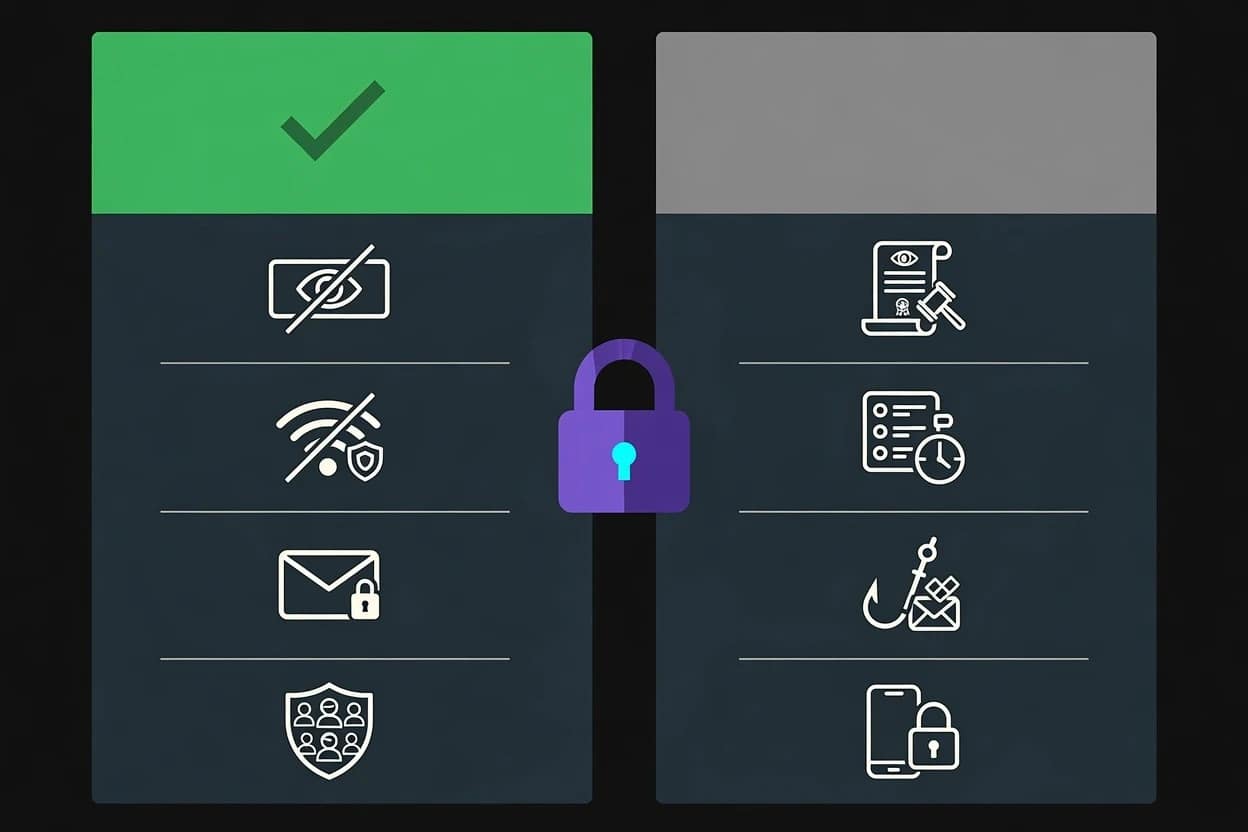
Worried about advertisers, data brokers, mass harvesting or dodgy cafe Wi-Fi? Proton Unlimited is a real, verifiable upgrade on all of that. Worried about dodging a targeted, lawful investigation instead? No email service hides you on its own, and anyone claiming otherwise is selling something. Not legal advice, just a reality of how these tools work.
What are the practical compromises of Proton Unlimited?
No bundle is all upside, and Proton Unlimited carries five weaknesses worth naming: you pay for tools you may not use, it is single-user only, collaboration trails the mainstream suites, storage is capped at 500 GB, and migration is real work. For some readers, those matter more than any privacy win above.
Pay for tools you do not use, and you have overpaid. It is a single-user plan, so two people sharing an account need Proton Duo or Family instead, an easy thing to get wrong at checkout. Collaboration is limited: Drive and Docs still trail Google Workspace and Microsoft 365 for real-time editing.
Storage is capped at 500 GB and shared between two services, so anyone hoarding media fills it fast, while mainstream providers scale to terabytes for less. Migration is real work, not a single click, even with Easy Switch doing most of the lifting.
Ecosystem maturity varies across the six tools, and subject lines are not encrypted, which Proton openly states. General support is email and a knowledge base, with live chat reserved for paid VPN, so self-recovery is on you by design. None of this sinks the bundle, but all of it is worth knowing before you hand over your card.
What are the best Proton Unlimited alternatives?
The best Proton Unlimited alternative depends on how many tools you need and how much collaboration matters. Use three or more privacy tools, and Proton Unlimited, or a smaller Proton plan, usually wins. Need deep collaboration and large-scale storage instead, and Google or Microsoft lead. Want a best-of-breed privacy stack you assemble yourself, and Mullvad plus specialist apps fits. Where a single tool serves you better, we say so plainly.
| Option | Privacy model | Jurisdiction | Coverage | Collaboration | Cost approach | Best-fit reader |
|---|---|---|---|---|---|---|
| Proton Unlimited | E2E + zero-access, no ads | Switzerland | All four, bundled | Moderate | ~$9.09/€9.09 mo first year | Solo user consolidating several private tools |
| Smaller Proton plan + standalone tools | E2E where offered | Switzerland + others | One tool now, add later | Varies | Lower if you need one thing | People who need one or two tools |
| Proton Family | E2E + zero-access | Switzerland | All four, up to 6 users | Moderate | Priced separately, 3 TB | Households wanting private tools for everyone |
| Google One / Workspace + privacy tools | Provider can access most data | USA | Storage + email + add-ons | High | Varies | Convenience and storage scale over privacy model |
| Microsoft 365 + privacy tools | Provider can access most data | USA | Email + storage + Office; no VPN | High | Varies | Office-centric users who want apps first |
| Mullvad VPN + Tuta/StartMail + Bitwarden | Strong, minimal-data | Sweden / Germany / mixed | Popular alternative privacy apps | Low (you assemble) | Varies | Purists choosing each tool on merit |
In BAIZAAR‘s view, Proton Unlimited wins on integration and verifiable privacy for a solo user who wants the whole stack, while Google and Microsoft win on collaboration and storage scale for those less wedded to the email privacy model. A modular Mullvad-plus-specialists stack wins for purists happy to wire it up themselves. The limitation never changes: need only one tool, and buying it alone beats every option here on price.
How to migrate without breaking your digital life
Migrate in stages, never all at once. Secure the new account, move one service at a time starting with your biggest pain point, import passwords and email carefully, keep verified backups, and leave the old services running for at least a month before you cancel anything. Staging it this way keeps a way back if something goes wrong.
- Create and secure the account first: a strong, unique master password, two-factor authentication switched on, recovery options set, all before you rely on anything. Proton cannot restore access without them, since it never holds a readable copy of your password.
- Start with whichever service solves your biggest headache, usually email or the VPN, and live with just that for a week before touching anything else.
- Import passwords carefully. Export from your old manager, import into Proton Pass, confirm a handful of logins work, then delete the plain-text export file straight after. If a specialist suits you better, our Proton Pass guide for remote teams covers the alternatives.
- Move email, aliases, contacts and domains across gradually with Easy Switch, keeping the old inbox forwarding on as a safety net while you settle in.
- Shift files in batches, keep a verified local backup, and let Proton Drive’s own sync do the work rather than hand-sorting files mid-move, which is how duplicates happen.
- Test sharing, recovery and multi-device access before you commit.
- Keep the old services live for a rollback window of at least a month, since that is the safety net that makes the rest of this list low-risk.
- Cancel the old subscriptions only once everything checks out, one at a time, not all in one afternoon.
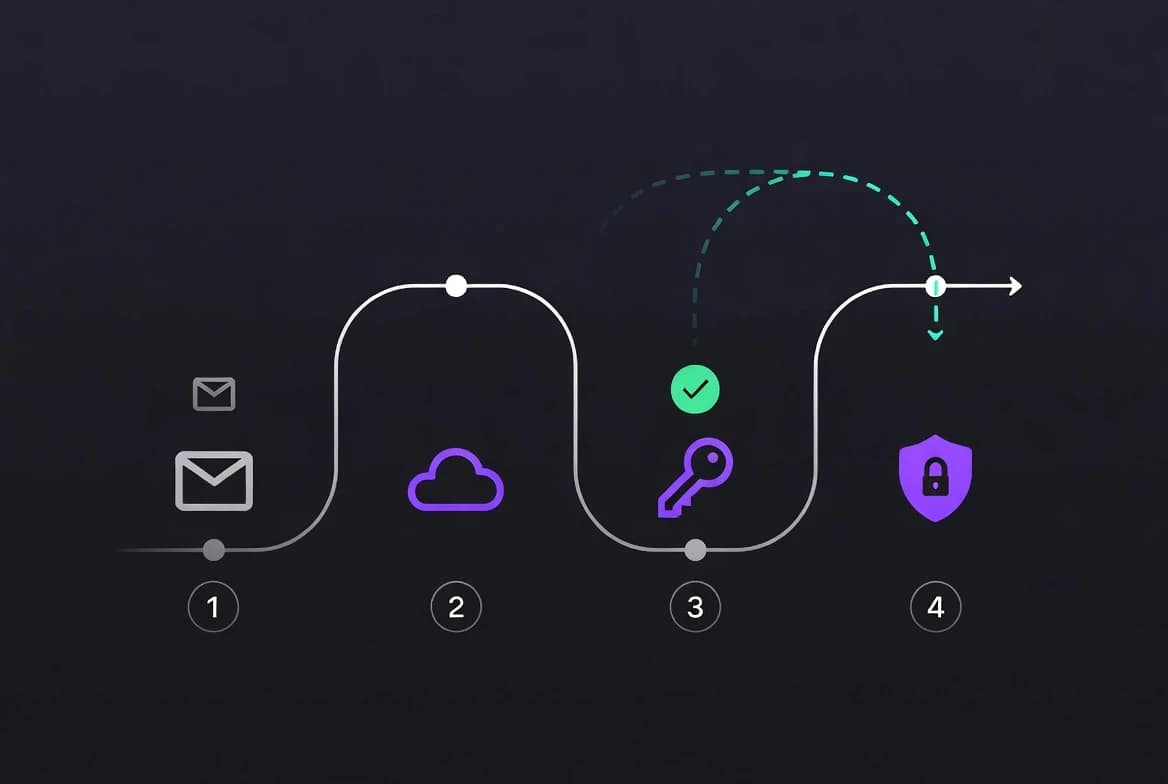
The classic mistakes, in order of how often we see them: deleting the old account too soon, forgetting Proton can’t recover a lost password without recovery already set up, assuming 500 GB will somehow swallow a full media library, and trying to migrate everything in one caffeine-fuelled Sunday afternoon. Rushed migrations are how duplicates and lost logins happen.
Proton Unlimited in 2026: final verdict
Proton Unlimited is worth it if you will use at least three of its six tools, particularly Mail, VPN, Drive and Pass; it is a poor buy if you only want one service, or need deep, real-time collaboration.
That verdict rests on a genuine trade: one bill instead of five, and privacy you can verify rather than take on trust. It is what earns Proton Unlimited its 4.7 out of 5 in BAIZAAR‘s assessment, built on open-source apps, four consecutive independent no-logs audits and a published transparency record, not on marketing.
If a single tool is all you need, one Proton Plus plan is the smarter buy, and private has never meant anonymous, so a targeted, lawful investigation stays a separate problem.
But if you want several private tools working together, under Swiss law, on one tidy subscription, little else at this price comes close. The reader who gets the most here is the privacy-first individual, or the remote professional replacing several paid services in one move. You stop renting your privacy back from the companies that profit from it.
If that reader is you, this Proton Unlimited Review 2026 points you to one sensible next step: claim 30% off your first year of Proton Unlimited here and put it through the 30-day money-back guarantee. Check the live price at checkout first, since offers and currencies shift. If it is not for you, walk away; cancelling costs nothing but ten minutes.
Proton Unlimited (FAQ)
Short, direct answers to the questions readers ask most, gathered from this Proton Unlimited Review 2026. Price, privacy, sharing and how it compares with Google are all covered below.
Is Proton Unlimited worth it in 2026? (Proton Unlimited Review 2026 verdict)
Proton Unlimited is worth it in 2026 if you use at least three of its bundled tools. It packages Mail, VPN, Drive, Pass, Calendar and Wallet for $12.99 or €12.99 a month, currently $9.09, €9.09 or £7.27 on the discounted first year, which undercuts buying those services separately once you use three or more. The value rests on consolidation. If you only need one tool it is poor value, since Proton is not the cheapest option in any single category alone.
What do I get with Proton Unlimited?
Six paid Proton services under one account: Mail Plus, VPN Plus, Drive Plus, Pass Plus, Calendar and Wallet, plus free-tier Lumo. That is 500 GB shared between Mail and Drive, 15 addresses across 3 custom domains, unlimited aliases, Sentinel protection, VPN on up to 10 devices and 50 vaults in Pass. Storage stays capped at 500 GB despite the plan name.
Is Proton Unlimited cheaper than buying Proton services separately?
Yes, for most people using more than one tool. Mail Plus and VPN Plus together already approach the bundle price on annual billing, so adding Drive, Pass and Calendar tips it clearly cheaper, especially with 30% off that first year. Want three or more services? Take the bundle. The exception is single-tool buyers, where the matching standalone plan simply costs less. Just watch the renewal price, since that discount only covers the first term.
Can Proton replace Google?
Mostly, for a privacy-conscious individual, with two gaps. Mail, Drive, Calendar and Pass cover email, storage, scheduling and passwords with encryption Google does not offer, and Proton states there is no ad-driven data harvesting underneath. The gaps are collaboration and scale: Google Docs, Sheets and Meet are more mature for real-time teamwork, and Google’s storage is cheaper per gigabyte. For personal use it is a strong replacement; for collaborative work, expect some friction.
Is Proton Unlimited safe and private?
Among the safest mainstream privacy suites, yes, but safe is not the same as anonymous. Proton states it runs end-to-end and zero-access encryption, sits in Switzerland, publishes open-source apps, and has passed four consecutive independent no-logs audits plus a SOC 2 Type II audit. Encryption does not hide everything, though. Metadata leaks through, subject lines stay unencrypted, and a valid Swiss court order can still compel Proton to log data for one specific account, as happened in 2021.
Is Proton VPN included, and is it better than VPN Plus?
Fully included, at no extra cost, so “better than VPN Plus” just means five more services stacked on top. The VPN itself does not change: up to 10 devices, Secure Core, Tor over VPN, NetShield, P2P and the same audited no-logs policy. Want a VPN and nothing else? Buy VPN Plus alone, since it is cheaper and you avoid paying for tools you will not touch. Only choose the bundle when you will use the wider suite.
Can two people or a family use Proton Unlimited?
No. It is a single-user plan, and sharing one login goes against Proton’s terms and undermines the per-user email and VPN setup it is built around. Two people with their own accounts need Proton Duo instead, two users and 2 TB, or Proton Family, up to six users and 3 TB. Price up Duo or Family, both of which work out reasonable per person at full capacity.
Can I cancel Proton Unlimited easily, and is there a free version?
Yes, cancelling is straightforward. There is a permanent free tier, though no standing free version of Unlimited itself. Downgrade through your account dashboard at proton.me, and Proton states paid plans include a 30-day money-back guarantee. Downgrading means fitting inside the lower plan’s limits, so you may need to trim stored data first. A time-limited Unlimited trial has historically only appeared when leaving a Proton Family group.
What are the main disadvantages of Proton Unlimited?
Paying for tools you might never use, the single-user restriction, limited collaboration and capped storage, that is the honest list. It only saves money across several services, and as a solo plan, families need a pricier tier. Drive and Docs still trail Workspace and 365 for real-time collaboration, and 500 GB fills up fast if you are media-heavy. Migration takes effort, a few apps are younger than you would like, and subject lines stay unencrypted.
Which Proton plan is best for me, and is Proton better than Google?
Depends entirely on how many tools and people you’re covering, and whether privacy or convenience matters more to you. Solo user wanting the whole private stack, choose the bundle. Email only, Mail Plus is cheaper. VPN only, VPN Plus alone wins outright. Two people, Duo. A household, Family. Proton leans harder into privacy by default, since its core services carry end-to-end and zero-access encryption that Google’s free consumer tools do not offer, but Google still wins on collaboration and raw storage scale. Pick your priority.
Sources and further reading
The claims in this Proton Unlimited Review 2026 draw on Proton’s own documentation, independent audit reports and public legal records, listed below by category so you can check them yourself.
Proton product and pricing documentation: Proton plans explained; Proton pricing; Proton VPN pricing; Proton Mail vs. Gmail (2026); Who owns Proton Mail.
Audits and transparency: Securitum Proton VPN no-logs audit (2025); Proton transparency report; Proton VPN server network coverage.
Legal and regulatory context: Proton clarification on the 2021 case; Investigatory Powers Act 2016, legislation.gov.uk; ProtonMail calls compromise claim a hoax.
Migration and account support: Easy Switch import assistant; What to do if a company blocks a Proton Mail address.
Proton Unlimited Review 2026: footnotes and references
Every numbered claim in this review links back to one of the sources below; the footnote markers throughout the article point here.
- Proton Unlimited list pricing and the 30% first-year discount on the annual plan, taken from Proton’s live checkout on 16 July 2026. Source: proton.me/pricing. ↩ ↩
- Proton shows prices in your local checkout currency and adjusts for VAT, region and payment method, so confirm the live figure before purchase. Source: proton.me/pricing. ↩
- Contents of the Proton Unlimited plan: six paid services plus free-tier Lumo, 500 GB storage, 15 email addresses, 3 custom domains, unlimited aliases, VPN on up to 10 devices and 50 Pass vaults. Source: Proton plans explained. ↩ ↩ ↩ ↩
- Proton Duo covers two users with 2 TB; Proton Family covers up to six users with 3 TB. Source: Proton plans explained. ↩
- Proton states Proton Mail uses end-to-end and zero-access encryption, with no ad-based content scanning. Source: Proton Mail vs. Gmail (2026). ↩ ↩
- Proton Easy Switch imports mail, contacts and calendars from Gmail and Outlook. Source: Easy Switch import assistant. ↩
- Guidance for the rare cases where a website rejects a Proton Mail address. Source: What to do if a company blocks a Proton Mail address. ↩
- Securitum’s independent no-logs audit of Proton VPN (2025), the fourth consecutive such audit, published in full; Proton also completed a SOC 2 Type II audit in July 2025. Source: Securitum Proton VPN no-logs audit (2025). ↩ ↩
- Proton VPN server and country totals vary across Proton’s own pages, and some locations are delivered via Smart Routing. Sources: Proton VPN pricing and Proton VPN server network coverage. ↩
- Proton AG is a Swiss company headquartered in Geneva; Swiss-hosted data sits outside the US CLOUD Act, and Proton is not owned by China. Source: Who owns Proton Mail. ↩ ↩
- Proton’s clarification of the 2021 case, in which a Swiss court compelled IP logging for a single account routed via Europol while email contents stayed encrypted. Source: Proton clarification on the 2021 case. ↩ ↩
- Reported “ProtonMail hacked” claims were described as a hoax and failed extortion attempt; account compromises trace to phishing rather than a breach of Proton’s systems. Source: ProtonMail calls compromise claim a hoax. ↩
- Investigatory Powers Act 2016, full statutory text. Source: Investigatory Powers Act 2016, legislation.gov.uk. ↩
- Proton’s transparency report, detailing how it handles law-enforcement and legal requests. Source: Proton transparency report. ↩