
WireGuard vs OpenVPN Comparison:
Which Protocol Actually Keeps You Safe in 2026?
One is harder to crack. One is harder to spot.
Here is how to decide which matters more.

Published: 28 May 2026 | Author: Baizaar Lee | Last reviewed: 28 May 2026
The WireGuard vs OpenVPN comparison comes down to a straightforward split: WireGuard is usually faster and harder to misconfigure; OpenVPN is older, more flexible, and generally better at hiding that you are using a VPN at all. Neither protocol wins every scenario, and which one protects your privacy best depends on your threat model, your provider, and how hostile the network is.
TL;DR: WireGuard uses a small, modern codebase that is easier to audit and harder to break with a bad config. OpenVPN is battle-tested, highly configurable, and can blend into ordinary HTTPS-style traffic in ways WireGuard generally cannot. For everyday privacy, WireGuard is the cleaner default. For censorship resistance or stealth-heavy environments, OpenVPN still has the stronger toolkit.
Disclosure: Some links in this article are affiliate links. If you buy through them, BAIZAAR earns a small commission at no extra cost to you. We only recommend tools we have actually tested.
- WireGuard vs OpenVPN Comparison: At a Glance
- WireGuard vs OpenVPN Quick Comparison Table
- What Makes the WireGuard vs OpenVPN Comparison Matter in 2026
- WireGuard vs OpenVPN Comparison: Security Analysis Side by Side
- What WireGuard Does Best in the WireGuard vs OpenVPN Comparison
- What OpenVPN Does Best in the WireGuard vs OpenVPN Comparison
- Where WireGuard Falls Short
- Where OpenVPN Creates Privacy Compromises
- WireGuard vs OpenVPN Comparison: Which Protocol Should You Choose in 2026?
- WireGuard vs OpenVPN Comparison: Practical Setup Recommendations
- FAQ: WireGuard vs OpenVPN Comparison
WireGuard vs OpenVPN Comparison: At a Glance
This WireGuard vs OpenVPN comparison is for people who want a plain-English answer first, not a computer science lecture in a trench coat. Quick version: use WireGuard for everyday privacy and performance, and use OpenVPN when censorship resistance and traffic obfuscation matter more than raw speed.
That is the honest answer. It is also a slightly annoying one, because anyone promising a single winner for every use case is either selling a VPN, skipping the nuance, or both.
If you already know which way you are leaning and you want a provider that handles both protocols properly, Proton VPN is currently 50% off with the BAIZAAR exclusive deal plus a 30-day money-back guarantee.
WireGuard vs OpenVPN Quick Comparison Table
| Factor | WireGuard | OpenVPN | What it means in practice |
|---|---|---|---|
| Default speed | Usually faster | Usually slower | WireGuard often feels better for daily use, streaming, and mobile switching. |
| Codebase size | Much smaller | Much larger | Smaller code is easier to audit, which is nice. |
| Configuration flexibility | Limited | Extensive | OpenVPN gives experts more control, but also more ways to get it wrong. |
| Obfuscation potential | Weak by default | Stronger | OpenVPN is usually better where VPN blocking is active. |
| Mobile behaviour | Excellent | Good but clunkier | WireGuard copes better when your phone jumps between Wi-Fi and mobile data. |
| TCP support | No | Yes | OpenVPN can masquerade more easily as normal HTTPS traffic. |
| Privacy caveat | Peer IP handling needs provider mitigation | Misconfiguration risk | Both are private when implemented properly, neither is magic. |
What Makes the WireGuard vs OpenVPN Comparison Matter in 2026
The Protocol Foundation
WireGuard and OpenVPN solve the same basic problem in completely different ways. WireGuard was built to be lean, modern, and hard to misconfigure. OpenVPN was built to be flexible, adaptable, and capable of fitting into far more awkward environments.
That split affects privacy more than most review sites admit. A smaller protocol is often easier to audit. A more configurable one can survive hostile networks that would swat simpler traffic out of the sky. The EFF’s Surveillance Self-Defense guide on choosing a VPN is worth reading if you want a non-commercial take on why these architectural differences genuinely matter.
Why 2026 Changes the Stakes
The WireGuard vs OpenVPN comparison matters more now because the internet is less forgiving than it used to be. ISPs, workplaces, schools, and governments are better at spotting unusual traffic patterns. Some networks do not just log activity. They actively interfere with it.
That means the best VPN protocol for streaming is not always the best one for staying private in a restrictive environment. Slightly inconvenient, yes. Still true. The Internet Society’s overview of encryption in the modern internet gives useful context on why protocol choice now carries real-world consequences rather than just being a settings menu preference.
How These Protocols Actually Protect Your Data
Both protocols create an encrypted tunnel between your device and a VPN server. Your ISP can see that data is moving, but not the contents of the tunnel when things are set up properly. The practical difference comes from handshake design, encryption choices, routing behaviour, and how gracefully the tunnel survives real-world chaos.
And real-world chaos is the bit that matters. Coffee shop Wi-Fi drops. Phones bounce between 5G and home broadband. Laptops wake from sleep and pretend nothing happened. Protocol design decides whether your privacy survives that nonsense. For a technical but readable overview, the WireGuard’s Protocol and Cryptography Overview is a solid reference, and the official OpenVPN protocol documentation covers the OpenVPN side in similar depth.
WireGuard vs OpenVPN Comparison: Security Analysis Side by Side
Encryption Strength and Algorithm Differences
WireGuard uses a fixed modern cryptographic suite, which is part of why security researchers often prefer it. There is less room for negotiation, less room for downgrade nonsense, and fewer opportunities for somebody to leave an old setting hanging around because they copied a config from a forum post written when Theresa May was still in office.
OpenVPN can be configured very securely. That is important. But the phrase “can be configured” hides the main problem. OpenVPN gives administrators and advanced users a lot of options, and options are brilliant right up until a tired human picks the wrong one.
| Security element | WireGuard | OpenVPN |
|---|---|---|
| Encryption approach | Fixed, modern suite | Negotiable suite |
| Typical reputation | Cleaner and simpler | Flexible and mature |
| Human error risk | Lower | Higher |
| Security upside | Harder to misconfigure | Easier to tailor |
| Main drawback | Less adaptable | More complexity |
Speed vs Security Trade-offs
WireGuard is usually faster. Full stop. It tends to connect quicker, move traffic with less overhead, and feel less like a polite tax on your internet connection.
That matters for privacy because sluggish tools get disabled. People tolerate secure software right up until it buffers the football, mangles a Teams call, or turns a simple download into a life event. At that point they switch it off, and suddenly the “more secure” setup is doing absolutely nothing at all.
OpenVPN is not slow in a catastrophic sense. It is just often slower enough to be noticeable. For steady desktop use, that may be fine. For mobile users, streamers, and anyone who wants their VPN to stop being dramatic, WireGuard generally feels better.
Code Audits and Vulnerability Records
WireGuard benefits from a much smaller codebase and a reputation for modern, focused design. That makes auditing easier. It also makes explanation easier, which sounds trivial until you have spent ten minutes trying to work out whether a provider’s privacy claim is a technical fact or marketing with a tidy haircut.
OpenVPN, though, has age on its side. It has been battered, tested, prodded, deployed, fixed, and scrutinised for years. That history is useful. A long list of resolved issues does not automatically make software unsafe. Sometimes it means the software has actually lived a life in public.
The wart here is obvious. WireGuard is newer, so some long-tail edge cases may only emerge with time. OpenVPN is older, so complexity remains a standing risk. Pick your poison, but at least pick it knowingly.
Mobile Implementation Differences

If you use a VPN on your phone, WireGuard tends to be the better daily companion. It handles network changes gracefully and reconnects with much less fuss.
OpenVPN can still work perfectly well on mobile, but it is more likely to feel fussy when your connection changes mid-journey. That does not make it rubbish. It just makes it less forgiving when you are moving around and expecting the tunnel to stay sorted without supervision.
If your VPN drops every time you switch from Wi-Fi to mobile data, that is not a minor inconvenience. Proton VPN’s WireGuard implementation handles those transitions cleanly, includes built-in NetShield ad and tracker blocking, and is currently 50% off exclusively through BAIZAAR. Grab the deal here before it expires with a 30-day money-back guarantee.
What WireGuard Does Best in the WireGuard vs OpenVPN Comparison
Modern Cryptography Implementation
This is one of the standout points in any WireGuard vs OpenVPN comparison worth reading. WireGuard uses a modern set of cryptographic choices and avoids the buffet-style configuration sprawl that often creates trouble elsewhere.
For normal users, that means fewer hidden footguns. You are less likely to end up on a weaker setup because some obscure option was left enabled, buried in a client panel you never opened, which is frankly how half of the internet gets broken. See also our full Proton VPN 2026 privacy guide on Baizaar for how a quality provider translates these protocol-level protections into something you can actually trust without becoming a cryptography enthusiast.
Simplified Code Base Benefits
WireGuard’s smaller codebase is not just a nerdy talking point. Fewer moving parts usually means fewer attack surfaces, simpler audits, and fewer weird interactions between legacy features.
To be fair, small does not automatically mean flawless. Bugs can still exist. But simple tools fail in simpler ways, and that is often a gift when privacy is on the line.
Faster Connection Times
WireGuard connects quickly and recovers quickly. That shortens the awkward moments where your VPN is half-awake and your traffic is deciding whether to wait politely or sprint into the open internet wearing nothing but optimism.
That is not just convenience. It is practical privacy. Less delay means fewer chances for impatient users to give up and carry on without protection.
BAIZAAR Verdict: WireGuard
Rating: 4.5 / 5
Honestly, WireGuard is the protocol I actually use. It connects before you have finished blinking, behaves sensibly when your phone forgets what network it is on, and the codebase is small enough that a security researcher can read the whole thing without needing a holiday afterwards. The cryptography is modern, fixed, and not negotiable, which sounds like a limitation until you realise that most VPN disasters begin with someone negotiating themselves into a weaker setting they did not notice.
The one honest knock: WireGuard is not subtle. On a hostile network that is looking for VPN traffic, it sticks out. If that describes your situation, read the OpenVPN section before you decide. For everyone else, and that is most people, WireGuard is the cleanest, fastest, and least dramatic way to stay private online in 2026.
Reviewed by Baizaar Lee, May 2026
What OpenVPN Does Best in the WireGuard vs OpenVPN Comparison
Battle-Tested Reliability
OpenVPN has been around long enough to earn a level of trust that newer protocols are still building. When people ask which VPN protocol they should use for a serious, known quantity, OpenVPN remains a very sensible answer.
Age helps here. It has survived years of deployment across commercial VPNs, enterprise environments, activist use cases, and awkward network setups. That track record counts for something.
Advanced Configuration Options
This is where OpenVPN stops being merely older and starts being strategically useful. If you need custom routing, particular transport choices, or more granular tuning around how traffic behaves, OpenVPN gives you options WireGuard simply does not.
That flexibility is excellent for advanced users. It is less excellent for everyone else. More knobs means more mistakes. Honestly, the protocol sometimes feels like it was designed by someone who trusted administrators far more than administrators deserve. The official OpenVPN protocol specifications are comprehensive if you want the full picture.
Obfuscation Capabilities
OpenVPN is often the better pick when traffic needs to look normal rather than merely encrypted. Run it over TCP, place it on port 443, and it can blend into ordinary HTTPS patterns far more convincingly than WireGuard can by default.
This matters a lot for censorship resistance. In any WireGuard vs OpenVPN comparison involving restrictive countries, school firewalls, or stubborn workplace networks, OpenVPN’s ability to disguise itself is a proper advantage. The Tor Project’s official guide to censorship circumvention is a useful non-VPN reference for understanding why hiding the shape of traffic matters as much as hiding its contents.
BAIZAAR’s Verdict: OpenVPN
Rating: 4 / 5
OpenVPN is not flashy and it was never meant to be. What it is, is dependable in a way that newer protocols are still earning the right to claim. It has been deployed in hostile environments, pulled apart by researchers, patched, improved, and deployed again. That history matters when your threat model is not theoretical.
The configuration depth is a double-edged sword, brilliant if you know what you are doing, quietly dangerous if you do not. Run it over TCP on port 443 in a restrictive environment and it becomes genuinely difficult to block without breaking ordinary HTTPS traffic in the process, which is a meaningful superpower. It is slower than WireGuard in most real-world tests, and the setup experience can feel like assembling flat-pack furniture without the instructions. But when stealth and proven reliability matter more than raw speed, OpenVPN earns its place at the top of the shortlist.
Reviewed by Baizaar Lee, May 2026
Where WireGuard Falls Short
Limited Obfuscation Support
WireGuard’s main privacy weakness is not weak encryption. It is visibility. The protocol is comparatively easy to fingerprint at the network level when no extra obfuscation layer is added.
That means a hostile network can often identify the shape of the traffic even if it cannot read the contents. So while WireGuard is generally the better everyday answer in this WireGuard vs OpenVPN comparison, it is not usually the smartest first choice where VPN blocking is aggressive.
Less Flexible Configuration
WireGuard keeps things simple by offering fewer choices. Lovely for most people. Slightly maddening for power users with very specific requirements.
If you need unusual routing setups, advanced transport tricks, or highly tailored enterprise controls, OpenVPN has more room to manoeuvre. WireGuard’s simplicity is part of its appeal, but it can also feel a bit like being handed an excellent screwdriver when what you actually needed was a toolkit.
Newer Technology With Unknowns
WireGuard is mature enough to trust, but still newer than OpenVPN by a wide margin. That matters because some security issues only appear after years of unpleasant real-world use. Yet, WireGuard is still the right choice for most people. But the honest drawback belongs in the article. Newer protocols have had less time to be surprised by humans doing daft things at scale.
Where OpenVPN Creates Privacy Compromises
Complex Code Base Issues
OpenVPN’s flexibility comes with a lot of baggage. Bigger codebases are harder to audit thoroughly, harder to explain cleanly, and more likely to contain old branches of complexity that still matter in odd corner cases.
This is precisely why the WireGuard vs OpenVPN comparison cannot end at “OpenVPN is older, therefore safer”. Older can mean tested. It can also mean layered with decisions made for different eras of hardware, traffic, and threat assumptions. The EFF’s Surveillance Self-Defense guide on choosing a VPN makes this point clearly: complexity is a security variable, not just a UI inconvenience.
Slower Performance Impact
A slower protocol is not merely an inconvenience. It changes behaviour. If your VPN keeps turning your connection into porridge, you stop using it.
That is the practical privacy downside. OpenVPN can be absolutely solid, but if users find it annoying enough to disconnect during streaming, gaming, or large downloads, the superior theory has lost to ordinary human impatience. If sluggish VPN performance is something you have actually lived with, Proton VPN’s WireGuard-based plans are currently 50% off through BAIZAAR with a 30-day money-back guarantee, so testing the speed difference yourself costs nothing.
Configuration Complexity and Human Error
This is the bit most comparison articles gloss over because it is not glamorous. Misconfiguration is a privacy risk. And OpenVPN gives users and providers plenty of room to misconfigure things.
When people search for OpenVPN TCP vs UDP explanations, what they often need is not protocol trivia. They need help avoiding bad choices. OpenVPN is powerful, but power without clarity is how people quietly end up less protected than they think.
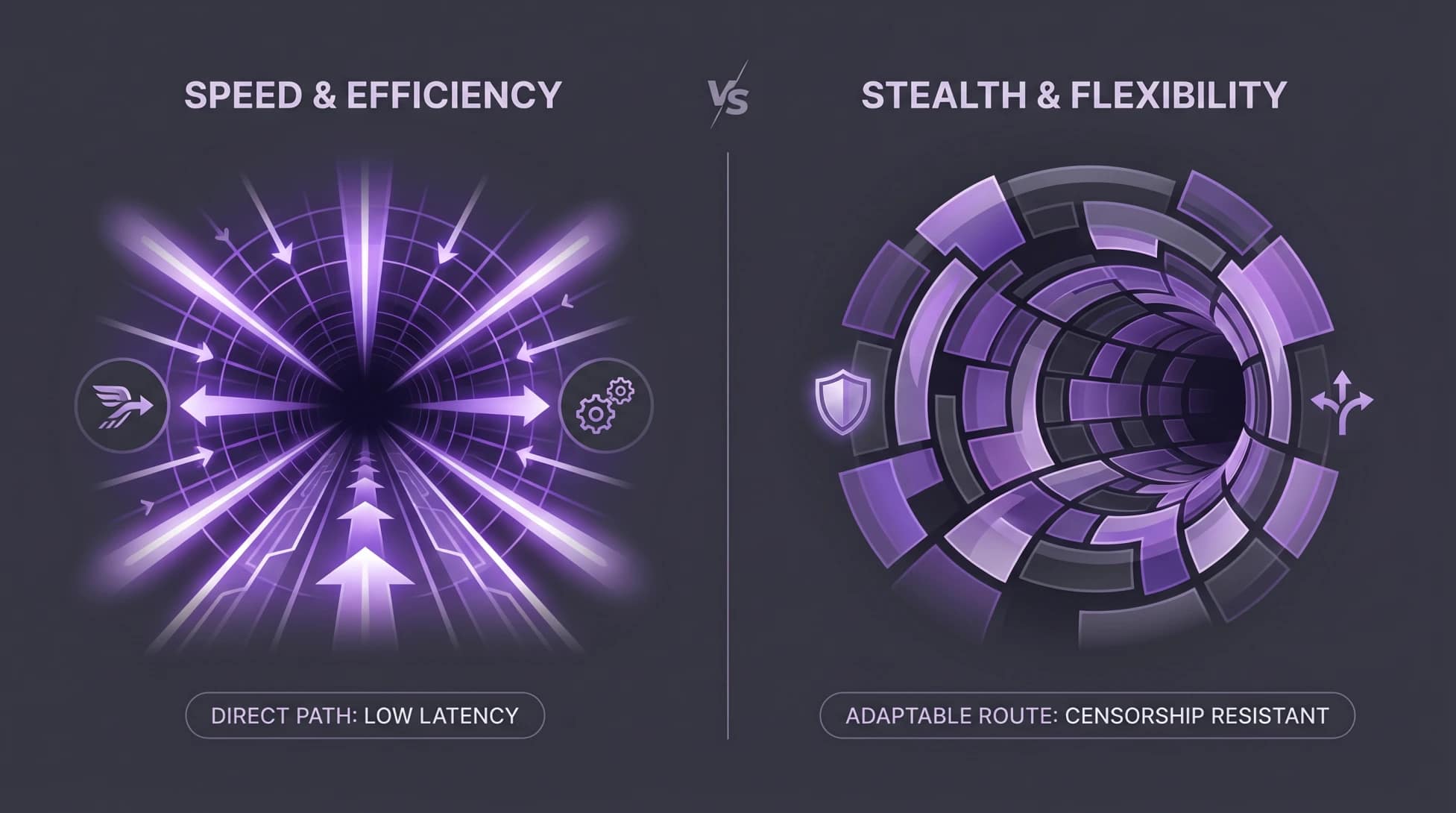
WireGuard vs OpenVPN Comparison: Which Protocol Should You Choose in 2026?
Privacy-Conscious Users
For most people, WireGuard is the better default. It is easier to use, usually faster, and less likely to go wrong because of a dodgy configuration choice.
If your goal is solid privacy for day-to-day browsing, remote work, banking, and general internet use, WireGuard is usually the protocol to reach for first. The provider implementing it matters enormously, and Proton VPN’s privacy-first WireGuard setup is one of the more thoroughly documented implementations available. Currently 50% off through Baizaar with a 30-day money-back guarantee.
Streamers and Speed-Focused Users
If you care about speed, stability, and the least annoying user experience, WireGuard wins more often than not in this WireGuard vs OpenVPN comparison. That makes it the better answer for anyone searching for the best VPN protocol for streaming or wanting WireGuard vs OpenVPN speed test data.
The caveat is straightforward: if your provider’s WireGuard implementation is poor, the protocol alone will not save you. Proton VPN also comes with NetShield, a built-in network-level ad and tracker blocker that works across all apps without needing a separate subscription, which is genuinely useful for speed-focused users who hate ads on top of everything else.
Users in Restrictive Countries
If censorship resistance is central to your privacy needs, OpenVPN deserves very serious consideration. It is usually better suited to stealthy deployments, especially when paired with obfuscation or stealth layers from a capable provider.
This is the one area in any WireGuard vs OpenVPN comparison where I would not default to WireGuard. If the network is actively trying to spot and block VPN traffic, OpenVPN has more tools for the job. For background on why circumvention tools keep getting blocked, this Hacker News thread featuring censorship circumvention researchers is worth a read.
WireGuard vs OpenVPN Comparison: Practical Setup Recommendations
How to Think About Provider Support
Protocols do not exist in a vacuum. A brilliant protocol implemented badly is still a bad user outcome. Some VPN providers handle WireGuard’s peer identity concerns carefully, with NAT layers and privacy-preserving session design. Others are less reassuring, and their documentation reads like it was written by someone trying to leave the room quickly.
The same goes for OpenVPN. Support for stealth, port selection, DNS leak protection, and sensible defaults matters just as much as the protocol itself. If you want to see what properly documented, privacy-first VPN implementation actually looks like, our honest Proton VPN UK review on BAIZAAR covers this in real detail.
Want everything under one roof? If privacy and convenience matter equally to you, Proton Unlimited bundles their full-premium privacy suite including: VPN, encrypted email, cloud storage, calendar, a full password manager with AI credential management + Lumo AI. Right now it is 30% off exclusively through BAIZAAR, plus the same 30-day money-back guarantee. It is the option for people quietly tired of paying five different privacy companies each month for five separate half-measures.
Setup Tips for Maximum Privacy
If you want this WireGuard vs OpenVPN comparison translated into action, use this checklist:
- Choose a provider with a clear no-logs policy and transparent technical documentation.
- Turn on the kill switch.
- Check DNS leak protection after setup using DNS Leak Test.
- Use WireGuard as your default unless you specifically need OpenVPN’s stealth or compatibility benefits.
- Use OpenVPN over TCP when hiding VPN use matters more than squeezing out every last megabit.
- Test behaviour on the networks you actually use, not just at home where everything behaves itself.
- If you want ad and tracker blocking baked in at the network level rather than bolted on via a browser extension, Proton VPN’s NetShield feature handles that without a separate app. Currently 50% off through BAIZAAR.
View the full Proton VPN pricing breakdown here if you want the specifics before committing.
FAQ: WireGuard vs OpenVPN Comparison
Does WireGuard Leak IP Addresses When OpenVPN Does Not?
WireGuard can raise privacy questions around peer IP handling if a provider implements it lazily. Good providers mitigate that risk. Poor ones may not.
The honest answer is no, not inherently, but implementation matters enough that you should not ignore it.
Is WireGuard More Secure Than OpenVPN in 2026?
In many everyday scenarios, yes, or at least safer in practice because it is simpler and harder to misconfigure. That is often the part people miss in a WireGuard vs OpenVPN comparison.
OpenVPN can still be just as secure when set up properly. The issue is that “properly” does rather a lot of work in that sentence.
Can Governments Identify Which VPN Protocol You Are Using?
Sometimes, yes. Encryption hides content, not always the fingerprint of the transport itself.
WireGuard is generally easier to identify by traffic pattern. OpenVPN, especially when obfuscated, is often better at blending in. Either way, the provider’s implementation of stealth features matters as much as the protocol.
Which Protocol Handles DNS Leaks Better?
Neither protocol magically fixes DNS leaks on its own. DNS leak protection is mostly about the VPN app, operating system behaviour, and provider setup rather than the protocol badge on the tin.
That said, stable reconnections and sensible defaults can reduce the chance of leaks in ordinary use, which gives WireGuard a practical edge for many people. Run a quick test on dnsleaktest.com after connecting to confirm your setup is clean.
What Is the Best Provider for the WireGuard vs OpenVPN Comparison in 2026?
Provider quality varies enormously. Proton VPN is one of the more transparent options, with a published privacy policy, independent audits, and a WireGuard implementation that handles the peer IP issue properly. The BAIZAAR 50% off Proton VPN deal includes a 30-day money-back guarantee, so there is a no-risk way to test it yourself.
Also on BAIZAAR:
- Proton VPN: The 2026 Privacy Playbook
- Proton VPN UK Review 2026
- YouTube Blocking Mullvad VPN? What Actually Works in 2026