
The Signal Linked
Device Attack:
& Why The US Is Paying
$10M To Stop It
Date Published: 30/06/2026 / Author: Baizaar Lee / Last Updated: 30/06/2026
TL;DR:
A Signal linked device attack bypasses app encryption entirely by tricking you into authorising a hostile device to mirror your chats in real time. The US government confirmed that thousands of accounts have been compromised this way and is now offering up to $10 million for information on the Russian hackers responsible. Your best defence is treating all support messages with extreme suspicion, auditing your active sessions, and migrating your core digital identity to a privacy-first ecosystem rather than relying on a single app to save you.
BAIZAAR earns a commission if you buy through links on this page, at no extra cost to you.
- How Does A Signal Linked Device Attack Actually Work?
- The Backup Recovery Key Escalation
- Who Are UNC5792 And UNC4221?
- The "Magic Shield" Fallacy
- Securing The Root Of Your Digital Identity
- Why Fragmented Tech Stacks Are A Vulnerability
- Spotting The Phish Before You Bite
- How To Audit Your Signal Sessions Right Now
- The Future Of Encrypted Communications
- Signal Linked Device Attack (FAQs)
If you use secure messaging apps for sensitive business or personal communications, you probably think you are untouchable. You are not. A successful Signal linked device attack sidesteps end-to-end encryption by exploiting human trust and habit instead of mathematics.
The US Department of State, through its Rewards for Justice programme, has announced a reward of up to $10 million for information on two Russia-aligned cyber espionage groups. These groups are publicly tracked by threat intelligence firms as UNC5792 and UNC4221. They are not burning millions of dollars on zero-day exploits to crack encryption algorithms. They are using simple phishing tactics to invite themselves into your chat history.
This matters heavily for GTM leaders, founders, and security professionals. The US government confirmed that thousands of individual accounts across various commercial messaging applications have already been compromised using these methods. The tactics used against Ukrainian military targets and US officials are exactly the same tactics used to steal corporate intellectual property and sensitive boardroom discussions.
How Does A Signal Linked Device Attack Actually Work?
To understand how a Signal linked device attack functions, you have to look at the legitimate features you use every day. The app allows you to link your mobile account to a desktop or tablet by scanning a QR code using Signal’s official linked devices feature. This is brilliant for typing long messages on a proper keyboard. It is also the exact mechanism hackers are weaponising.
According to threat intelligence reports from security researchers and the FBI, these Russian hackers send phishing messages containing malicious QR codes or fake support prompts. These are often disguised as urgent group invites, document access links, or security verifications. When a target scans the code, they are actually authorising the attacker’s device to connect to their account. From that moment on, the attacker can silently mirror every message sent and received.
The brilliance of this campaign is its utter simplicity. The cryptography remains perfectly intact. The attackers simply asked for a spare set of keys, and the victims willingly handed them over.
The Backup Recovery Key Escalation
The threat has recently escalated from simply linking a device to actively stealing your Backup Recovery Keys. This gives the attacker persistent access even if you change your phone or realise something is wrong.
Recent warnings from the FBI, CISA, and the Security Service of Ukraine outline exactly how this works. Hackers impersonate support services directly within the app or via email. They manufacture urgency by claiming your account data is “at risk of permanent loss due to a sync issue” or that you need protection against recent hacking attempts from foreign adversaries.
They will inform you of a mandatory two-factor verification process and ask you to submit your Backup Recovery Key. The moment you comply, they hijack your current account and any subsequent accounts made with the same phone number.
You can read our comprehensive Signal quishing attack security overview for a technical breakdown of how to check your active sessions right now.
Who Are UNC5792 And UNC4221?
Understanding the adversary helps you understand the threat level. UNC5792 is a malicious cyber group associated with the Russian Federal Security Service (FSB) Border Guards. UNC4221 operates on behalf of Russian military services.
These are not bored teenagers in a basement. They are state-sponsored operatives with specific intelligence-gathering goals. They target individuals whose messages contain highly valuable data. If you negotiate contracts, handle proprietary tech, or manage high-level personnel, your communications fit that description perfectly.
The “Magic Shield” Fallacy
This is where the pain really starts for privacy-conscious professionals. We install a secure messenger and immediately treat it like a magic shield. We assume that because the app is mathematically secure, our operational security is completely handled.
This creates a massive blind spot. If your threat model relies entirely on one application being infallible, you are one bad click away from a complete breach. A Signal linked device attack thrives on this exact complacency. You get an email to your standard corporate inbox asking you to “verify your secure chat”. Because you are in a rush between meetings, you scan the code or submit a code without thinking.
Your communications are only as secure as the weakest link in your digital identity. If your primary email provider scans your inbox to train algorithms, or if your password manager is just a spreadsheet on a shared drive, locking down your text messages is like putting a bank vault door on a cardboard box.
The US State Department is not offering millions in rewards because these attacks are rare edge cases. They are offering the money because a Signal linked device attack consistently works against incredibly smart people. You cannot fix human error entirely. You can, however, build a system that limits the blast radius when you inevitably make a mistake.
Securing The Root Of Your Digital Identity
If you want to survive the modern threat landscape, you need to compartmentalise your digital life. You must move your critical communications and recovery channels into an ecosystem built from the ground up for privacy.
This is why we constantly point paranoid productivity enthusiasts toward Proton. Your email is the master key to your digital life. If a hacker wants your Backup Recovery Keys to execute a Signal linked device attack, they will likely try to phish you through your primary email first.
If you are still using legacy providers that trade your data for free storage, you are exposing your master key to unnecessary risk. Moving to Proton Mail Plus changes this dynamic. It provides genuine end-to-end encryption for your inbox. It strips away the tracking pixels and surveillance capitalism that make phishing attempts so effective in the first place.
Right now, through BAIZAAR‘s exclusive partner link, you can test this architecture for practically nothing. Proton is offering an 80% discount on the first month of Proton Mail Plus. You pay just $1.00 upfront, backed by a full 30-day money-back guarantee. If you decide to commit long-term, their 12-month plan locks in a 40% discount at just $3.00 per month.
“Privacy is not about having something to hide. It is about retaining control over who gets to see your life. Proton Mail Plus locks the front door to your digital identity so thoroughly that most automated phishing campaigns simply bounce off.”
Proton does not magically prevent you from scanning a bad QR code on your phone. It does, however, dramatically reduce the noise, spam, and tracking that attackers rely on to profile you.
Why Fragmented Tech Stacks Are A Vulnerability
A Signal linked device attack is just one symptom of a broader disease. Threat actors are highly motivated to map your entire workflow. If they cannot get into your chat, they will go after your calendar to see who you are meeting. If they cannot get your calendar, they will target your cloud storage to read your meeting notes.
The fragmented approach to software is killing our security. Patching together five different apps from five different vendors creates five different attack vectors. You have to monitor the privacy policies, data breaches, and linked sessions for every single one of them.
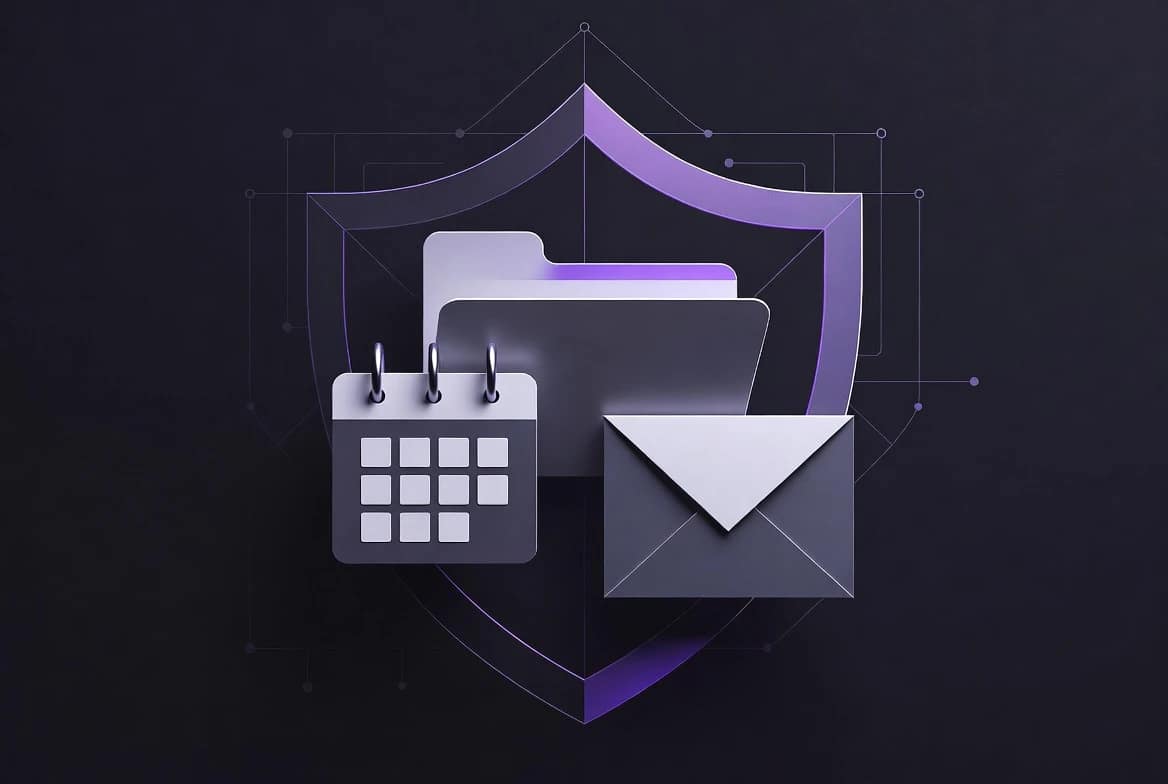
This is the exact problem Proton Unlimited solves. It is not just an email client. It is a locked-down, privacy-first ecosystem encompassing your calendar, your file storage, and your VPN. When you bundle your essential productivity tools inside a zero-knowledge architecture, you drastically shrink your attack surface.
Proton is currently running a Limited Time Offer on the 12-month Unlimited plan, taking 30% off the standard rate. This brings the cost down to just $9.09 per month, saving you $47.00 across your first year while securing your entire digital footprint. Like all their plans, it is completely risk-free for 30 days.
“Stop treating your cybersecurity like a patchwork quilt of free trials. Proton Unlimited gives you the encrypted email, secure storage, and VPN required (+ More) to operate safely in a world where governments have to put $10 million bounties on messaging app hackers.”
If you want to understand exactly what it feels like to run your daily operations inside a zero-knowledge architecture, read our comprehensive Proton Mail Plus review. We break down how stripping away corporate surveillance and tracking pixels fundamentally changes your threat model for the better.
Spotting The Phish Before You Bite
The people falling for a Signal linked device attack are not stupid. They are often simply busy. The attackers rely on urgency and authority to bypass your critical thinking. They will mock up a completely convincing email claiming your account will be suspended in 24 hours if you do not scan the provided QR code to verify your session.
They will also target the platform itself. You might receive a direct message from someone claiming to be technical support, complete with an official-looking logo. Customer support will never ask you to scan a QR code to link a device for troubleshooting. Real support teams communicate exclusively through official company email addresses and never ask users to provide verification codes within the application.
Another common vector for a Signal linked device attack involves fake group invitations. You might be expecting an invite to a sensitive project channel. The attackers, having compromised an associate’s account, send you a QR code and claim it is the only way to join the secure lobby. Once you scan it, they are in.
To combat this, you need to establish out-of-band verification. If a colleague sends you a QR code via email, text them to confirm it. If they send it via text, call them. This sounds paranoid, but in a landscape where state-sponsored actors are stealing corporate data, a little paranoia is just good business sense.
How To Audit Your Signal Sessions Right Now
If you suspect you have fallen victim to a Signal linked device attack, or if you simply want to practice good hygiene, you need to run a manual audit.
- Open the application on your primary mobile device.
- Tap your profile icon to open the settings menu.
- Select the option for ‘Linked Devices’.
- Review every single computer, tablet, or browser currently authorised on your account.
- If you see a device or location you do not explicitly recognise, tap it and select ‘Unlink’ immediately.
It is infinitely better to accidentally log yourself out of your own iPad than to let a Russian intelligence operative continue reading your strategic plans. If you fear your Backup Recovery Key is already compromised, you must immediately generate a new one in your settings. This action invalidates all previous keys and cuts off the attacker’s persistent access.
Human Limitations and Risks
We talk a lot about privacy tools on BAIZAAR, but it is vital to acknowledge their limitations. End-to-end encryption secures data in transit. Zero-knowledge architecture secures data at rest. Absolutely nothing secures data against human gullibility (not just yet anyway).
Moving your tech stack to Proton will not stop a Signal linked device attack if you willingly hand over access. Software cannot patch human psychology. The goal of a privacy-first ecosystem is to reduce your exposure to the initial phishing attempt, not to make you invincible. You still have to do the work. You still have to verify links, ignore unsolicited QR codes, and audit your sessions.
The Future Of Encrypted Communications
We are entering a phase where the cryptography is no longer the primary battlefield. The math works. The encryption holds. The war is now being fought over the endpoints, the interfaces, and the human beings operating them.
A Signal linked device attack is just the current flavour of endpoint compromise. Tomorrow, it might be a malicious keyboard extension or a compromised clipboard manager. The method changes, but the goal remains the same. Attackers want to bypass the encryption by compromising the environment around it.
To survive this, you have to stop trusting isolated applications and start trusting secure architectures. Do not rely on one app to be your impenetrable fortress. Build an ecosystem where a single failure does not lead to total compromise.
The $10 million bounty on these hackers proves that a Signal linked device attack is a devastatingly effective tool. Do not be the person who proves them right. Lock down your stack, verify every prompt, and take your privacy seriously before you become a cautionary tale.
Signal Linked Device Attack (FAQs)
What exactly is a Signal linked device attack?
A Signal linked device attack involves a hacker tricking you into scanning a malicious QR code. Instead of joining a group or verifying your identity, you unknowingly authorise the attacker’s computer to link to your account. This allows them to silently mirror and read your private messages in real time.
Did Russian hackers break the app’s encryption?
No. The end-to-end encryption remains entirely intact and secure. The hackers used social engineering and phishing to convince targets to hand over access, proving that the human element is always the weakest link in any security chain.
What is the Backup Recovery Key scam?
Hackers pose as support agents and tell targets they must complete a mandatory two-factor verification to avoid data loss. They then trick the user into sending their unique Backup Recovery Key, granting the hacker full persistent access to the account history.
Why is the US offering a $10 million reward?
The reward is part of a broad effort to disrupt state-sponsored cyber espionage. Groups like UNC5792, acting alongside the Russian FSB, have successfully compromised thousands of military, government, and civilian accounts using these phishing methods to gather critical intelligence.
How do I check if my account is currently compromised?
Open your app settings, navigate to the linked devices section, and review every active session listed. If you see a device or location you do not immediately recognise, unlink it immediately. You should make this audit a weekly habit.
Why should I switch to a secure email ecosystem?
Switching to a zero-knowledge ecosystem protects the root of your digital identity. It ensures that password reset links, Backup Recovery Keys, and sensitive business communications are shielded by end-to-end encryption. This drastically reduces your overall vulnerability to the phishing tactics used in a Signal linked device attack.