A Painless Todoist ADHD Setup: Dopamine-Driving into 2026 Success
Executive Summary
This ADHD Todoist setup is designed specifically for neurodivergent professionals who are tired of rigid, all‑or‑nothing productivity systems. Instead of forcing you into someone else’s routine, this ADHD Todoist setup uses your natural energy and attention patterns, this system works with neurodivergent wiring via three core mechanisms: frictionless voice capture (to bypass working memory deficits), energy-based filtering (to match tasks to brain capacity), and dopamine-driven micro-tasks.
It includes a complete “Burnout Bankruptcy” protocol for resetting without guilt and integrates essential companion tools for email management.
Right then. Let’s be honest.
Most traditional task systems collapse under ADHD brain realities; this ADHD Todoist setup is built to survive real‑life chaos. It assumes you wake up fully charged, maintain linear focus for eight hours, and actually remember to look at that meticulously colour-coded calendar you spent three hours designing last Sunday.
If you’ve tried countless apps and given up, this ADHD Todoist setup gives you a gentler way back into productivity.
The reality is messy. Your working memory is less like a filing cabinet and more like a sieve. You have days where you can rewrite an entire website in four hours (hyperfocus) and days where sending a single email feels like climbing Everest (paralysis).
I’ve spent years tearing down “perfect” systems that fell apart the moment the novelty wore off. This is not a pristine, Instagram-worthy aesthetic. It is a Todoist ADHD setup built for the chaotic, brilliant, inconsistent reality of 2026. It prioritises friction reduction over organisation, and forgiveness over perfection.
Let’s get your brain sorted.
Why Standard Productivity Advice Fails the Neurodivergent Brain
Standard systems like GTD, Eisenhower Matrix, Time-Blocking often fail ADHD brains because they rely on maintenance. They require you to categorise correctly upfront and reschedule missed tasks without spiralling into shame.
For a neurotypical brain, that’s “admin.” For an ADHD brain, that is a Wall of Awful.
A realistic Todoist ADHD workflow must accept two truths:
- Your future self is unreliable. Do not trust them to remember context.
- Friction is the enemy. If it takes more than three taps to add a task, you won’t do it.
We aren’t trying to “fix” you. We are building scaffolding to hold you up when your executive function takes an unscheduled holiday.
Strategy 1: Voice Capture is Your External Hard Drive
The single most critical feature in any neurodivergent task management system is speed. If you have an idea and don’t capture it within seconds, it’s gone. Evaporated. Likely replaced by a sudden urge to research 17th-century naval tactics.
Typing is too slow. Unlocking your phone, finding the app, and typing “Buy milk” allows too much time for distraction. In this ADHD Todoist setup, you treat your phone like an external brain, using voice input to capture tasks in seconds
The Todoist ADHD Setup
Aggressively leverage Todoist’s integration with voice assistants (Siri, Google Assistant, or Alexa).
- The Trigger: Set up a shortcut on your phone or watch. On iOS, it’s “Add to Todoist.” On Android, the integration is native.
- The Habit: When a thought strikes, speak it.
- “Hey Siri, add ‘Email Sarah about the project deadline’ to Todoist.”
- “Hey Google, add ‘Cancel free trial before Friday’ to Todoist.”
Why This Works
This separates capture from processing. Your only job is to dump the thought out of your head. You are treating Todoist as an external hard drive for your working memory. 1
Reality Check: Your inbox will look like a bomb site. Typos, half-thoughts, “buy cat” (when you meant cat food). That is fine. A messy inbox is better than an empty one because it means the system captured the chaos.
Implementation Tip:
🗣️Voice capture is one of the keystones of this ADHD Todoist setup, letting you dump thoughts into Todoist before they vanish
Bonus Strategy: The “Other” Inbox Hazard (Email Defence)
Before we fix your task list, we need to talk about the other to-do list that other people write for you: Email.
ADHD brains treat unread emails like danger signals. We either obsessively check them (dopamine seeking) or hide from them (avoidance). You can’t organize your Todoist if your Gmail is screaming at you.
For 2026, the best “set and forget” layer I’ve found is SaneBox.
Now, I know what you’re thinking. “Baizaar, why not just use Superhuman, Shortwave, or Clean Email?”
Here’s the rub:
- Superhuman ($30/mo): Brilliant, but it’s a whole new interface to learn. Friction.
- Clean Email / Mailstrom: Good for bulk deletion, but they require you to actively go in and scrub. That’s a chore.
- Shortwave / Missive: Great for teams, but often over-engineered for personal sanity.
SaneBox is different because it’s not an app. It works on the server side. You keep using Gmail, Outlook, or Apple Mail, but suddenly, the distraction vanishes. It uses AI to filter unimportant noise into a “@SaneLater” folder before it hits your phone notification.
The Killer Feature for to pair with this Todoist ADHD Setup: SaneBlackHole.
Drag a newsletter here once, and it never comes back. It’s cleaner than unsubscribing because it doesn’t require you to click through to a website (where you will get distracted).
Why not? If you’re drowning in email, grab a $25 credit (that’s basically a free run to test it) using this link: try.sanebox.com/baizaar
Note: Use that specific link; the standard one only gives you $15, and we prefer better math.
Pairing SaneBox (for input filtering) with Todoist (for task output) creates a “Quiet Zone” where you can actually think.
Strategy 2: Energy Filters, Not Due Dates
Standard advice says to organise by “Priority”. This is dangerous. A high-priority task due today might be impossible if your brain is in a low-energy fog. Staring at a list of “Important” tasks you can’t physically start is a recipe for shame.
In 2026, we organise by energy. We use Todoist energy filters to match tasks to your neurological capacity.
The Todoist ADHD Setup
Create labels based on your common brain states:
@high_energy: Deep focus (Writing, coding, strategy).@low_energy: Zombie tasks (Data entry, invoices, email).@quick: Under 5 minutes (Paying a bill, texting).@braindead: Zero brainpower needed (Ordering supplies, filing).
The Filters
Create custom filters to serve tasks based on how you feel right now.
Filter: 🧟 Zombie Mode
- Query:
@low_energy | @braindead & !subtask
Filter: 🚀 Hyperfocus
- Query:
@high_energy & today
Filter: ⚡ Quick Wins
- Query:
@quick & !subtask
Why This Works in a Todoist ADHD Setup?
When you have brain fog, you don’t look at “Today.” You click “Zombie Mode.” You knock out three low-energy tasks. That small dopamine hit kickstarts your engine. It removes the decision paralysis of weighing importance against capability.
Pro Tip: Custom filters and unlimited reminders are locked behind Todoist Pro. If you’re ready to commit to this setup, you can get 2 months free to test the theory here: Todoist Pro – 2 Months Free Offer .
It’s the logical next step if you find the free version’s 3-filter limit cramping your style.
Strategy 3: Dopamine-Driving with Micro-Tasks (Breaking the Wall)
To an ADHD brain, “Write Novel” isn’t a task. It’s a threat. Your amygdala sees it and screams “ABORT!” 2
You need to break tasks down until they are ridiculously, almost insultingly, small. This is about manufacturing dopamine.
The Todoist ADHD Setup
Inside a project, break work into atoms:
- Bad Task: “Write Report”
- Good Task: “Open Google Doc”
- Good Task: “Write Title”
- Good Task: “Paste messy notes”
Clicking a checkbox releases a tiny reward. If “Write Report” is one task, you get one hit after four hours of torture. If you break it into 20 micro-tasks, you get 20 hits along the way. You are gamifying your own workflow.
Strategy 4: Context and Location Triggers
ADHD comes with “Context Collapse.” You remember to buy milk when you are in the shower. You remember to email your boss when you are driving.
The Todoist ADHD Setup
Use Todoist location reminders (Pro feature) to act as a prosthetic memory.
- The Shop: Set a reminder for “Buy batteries” that triggers only when you arrive at the supermarket GPS coordinates.
- The Leave: Set “Check laptop charger” to trigger when you leave the office.
Strategy 5: The “Anti-Productivity” Reality Check
Here is the part where Baizaar Lee gets real with you. You will fall off the wagon.
You will have a week where you ignore your Todoist ADHD Setup completely. The red notification badge will climb to “99+”. Standard advice says “Catch up!” Realistic advice says “Declare Bankruptcy.”
The Bankruptcy Protocol
- The Nuclear Option: Create a new project called “Backlog Purgatory.”
- The Sweep: Select all overdue tasks. Move them to Purgatory.
- The Fresh Start: Your “Today” view is now empty. Breathe.
Go into Purgatory once a week and fish out one thing that matters. Delete the rest. This is shame-free productivity.
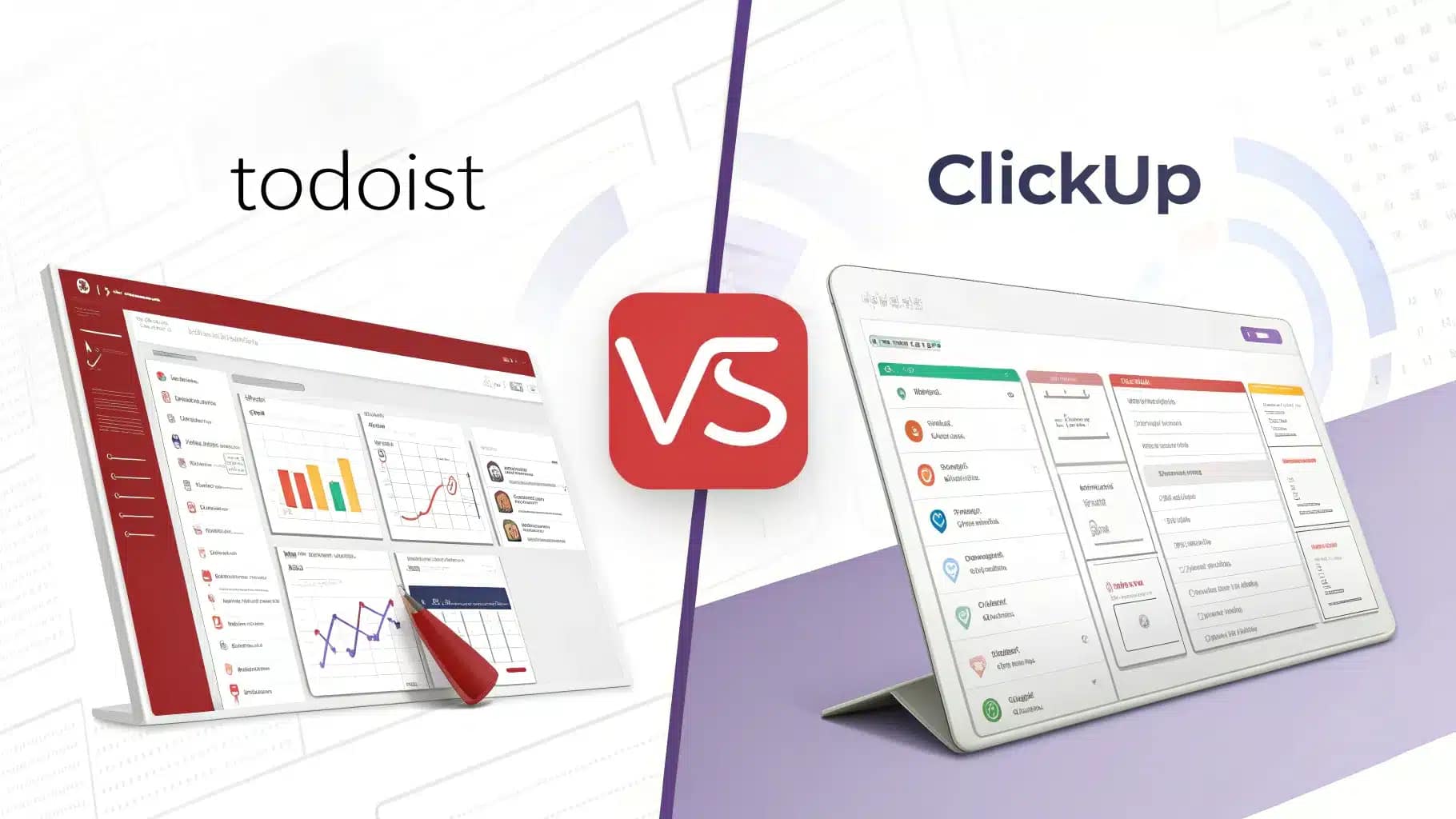
Comparison: Todoist vs. The Rest
(ADHD Edition)
| Feature | Todoist | Notion | Apple Reminders | Goblin Tools |
|---|---|---|---|---|
| Capture Speed | 🚀 Fastest (Natural Language) | 🐢 Slow (Database load) | 🚀 Fast (Siri) | 😐 Medium |
| ADHD Friction | ⭐ Low | ⚠️ High (Tweaking traps) | ⭐ Low | ⭐ Low |
| Structure | Rigid but flexible | Infinite (Danger!) | Basic | None (One-off) |
| Best For | Daily Execution | World Building / Notes | Apple Purists | Breaking down tasks |
| Cost | Free / £4 mo | Free / Paid | Free | Free / Cheap |
Verdict: Use Notion (although I prefer obsidian for privacy and the customisation) for storing your brain (PKM). Use Todoist for doing things.3
Accessibility & Low-Cost Fallbacks
“I can’t use Voice Assistants.”
- Workaround: Use the Todoist Home Screen Widget (Android/iOS). It puts a “Quick Add” button one tap away.
- Browser: Use the Chrome extension with the shortcut
Shift+Command+A(Mac) orShift+Alt+A(Windows). - Accessibility is non‑negotiable: this ADHD Todoist setup assumes fluctuating energy, executive function crashes, and sensory overload days.
“I can’t afford Pro.”
- Workaround: Use emoji tags instead of filters. Tag tasks with 🔋 (High Energy) or 🧟 (Low Energy). You can’t filter them as elegantly, but you can visually scan for the emoji.
- Workaround: Even if you’re on a tight budget, you can replicate the core of this ADHD Todoist setup using the free tier of Todoist and a few simple tweaks. See if the ROI is there
FAQ: Optimising Your Todoist ADHD Setup
Q: Is Todoist actually good for ADHD?
A: Yes, specifically because of “Natural Language Input” (typing “Meeting Friday 2pm” automatically sets the date). This reduces the friction of logging tasks, which is the #1 failure point for us.
Q: Should I use the Free or Pro version?
A: Start Free to prove you’ll actually use the capture habit. Upgrade to Pro (2 months free here) once you need more than 3 active filters or location reminders.
Q: How do I handle “Time Blindness”?
A: Sync Todoist with Google Calendar (2-way sync). Seeing your tasks as blocks on a calendar forces you to accept that a 4-hour project cannot fit into a 15-minute window.
Q: What if I have too many projects?
A: Archive them. ADHD brains love starting projects and hate finishing them. Archiving hides the clutter without “deleting” the dream.
Q: Is this setup only for ‘high‑functioning’ ADHD?
No. This Todoist ADHD setup is designed to flex with bad brain days, burnout, and inconsistent motivation.
Q: Can I use this ADHD Todoist setup if I’m not formally diagnosed?
Yes. If ADHD‑style overwhelm and task paralysis resonate with you, this ADHD Todoist setup can still help.
Glossary
- Voice Capture: Using speech-to-text to offload working memory instantly.
- Energy Filter: A view showing tasks matching your current mental capacity (not just deadline).
- Friction: The number of steps between thinking of a task and recording it.
- Context Collapse: The ADHD tendency to remember tasks at the wrong time/place.
- SaneBlackHole: A SaneBox feature that permanently filters unwanted senders without manual unsubscribing.
- Body Doubling: Working alongside someone else (or a digital avatar) to anchor focus.
This Todoist ADHD setup teaches neurodivergent professionals and workers how to build a realistic, shame-free Todoist ADHD setup that doesn’t collapse when your executive function takes a holiday. Rather than fighting your brain’s wiring, this system works with it through three core practices: voice capture (outsourcing working memory), energy filters (matching tasks to your current neurological state), and micro-task breakdowns (manufacturing dopamine through small wins). The Todsetup prioritises friction reduction over perfection and includes a practical “burnout bankruptcy” protocol for when the system itself becomes a source of shame.
Best for: Neurodivergent knowledge workers, GTM leaders, and creatives. ADHD professionals, neurodivergent knowledge workers, anyone with executive dysfunction who owns or has access to a smartphone.
Time to implement: 30-45 minutes for basic setup; full mastery takes 2-3 weeks of habit formation.
Core Tool: Todoist (Free or Pro).
Bonus Tool: SaneBox (15$ credit off) and/or free 14 day trial.
Sources & Authority (non-clinical, for credibility)
- Working Memory Deficits: Frontiers in Psychology (2024) – Highlights the “leaky bucket” nature of ADHD working memory.
https://www.frontiersin.org/articles/10.3389/fpsyt.2024.1277583/full ↩︎ - Inhibitory Control: Nature Reviews Neuroscience – Discusses the amygdala’s role in task avoidance (the “Wall of Awful”).
https://www.nature.com/articles/s41598-025-08944-w ↩︎ - Gamification: Journal of Attention Disorders – Confirms immediate feedback loops (ticks/dings) increase ADHD task adherence.
https://pmc.ncbi.nlm.nih.gov/articles/PMC11894355/ ↩︎
(Published by Baizaar.tools. Content contains affiliate links for Todoist and SaneBox which support our research. We only recommend tools we actually use to keep our own lives sorted.)

Is there a way you also use priority flags in this system?
Thanks!